
Quick Take
- Dragonflies have been virtually unchanged for 300 million years, and the reason they stopped evolving is stranger than you'd expect. Explore their ancient history →
- A single dragonfly can consume over 100 mosquitoes in one day, which raises the question of why they aren't everywhere. See their daily diet →
- Their eyes give them a sensory ability most predators can only dream of, which is why escape attempts almost always fail. Discover their 360° vision →
- Damselflies look almost identical to dragonflies, but one key behavior instantly tells them apart. Compare damselfly differences →
Dragonflies eat mosquitoes, flies, moths, beetles, and many other insects, making them an important part of the ecosystem. These amazing insects also serve as a food source for a variety of fish and birds. They are found on every continent with the exception of Antarctica. Wooded areas as well as freshwater lakes, ponds, marshes, and streams are all habitats of the dragonfly.

5 Incredible Dragonfly Facts
- There are more than 3,000 species of true dragonflies. The largest dragonfly species in the world can reach more than 5 inches in length.
- They can fly as fast as 34 to 37 mph, depending on the species.
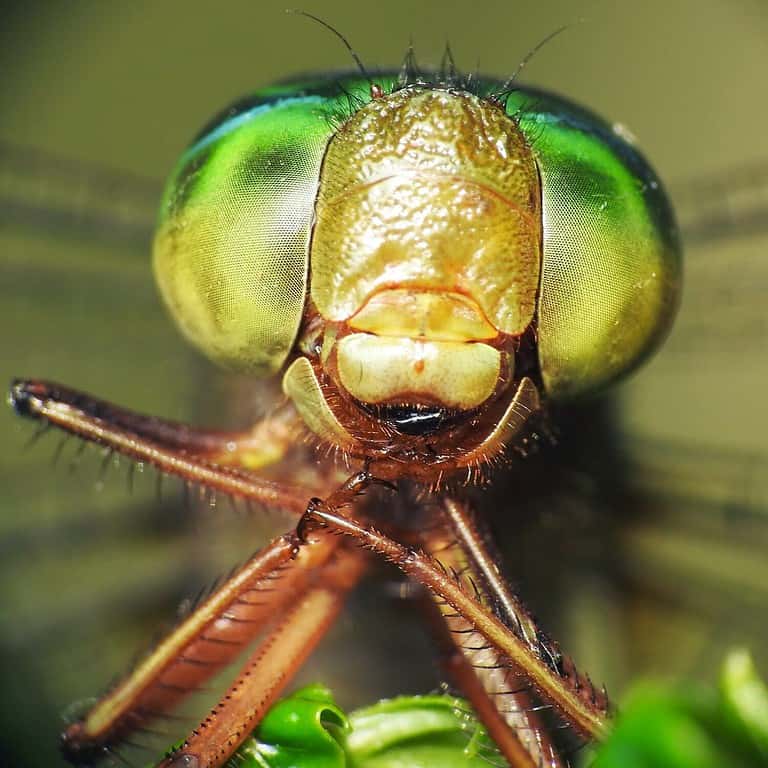
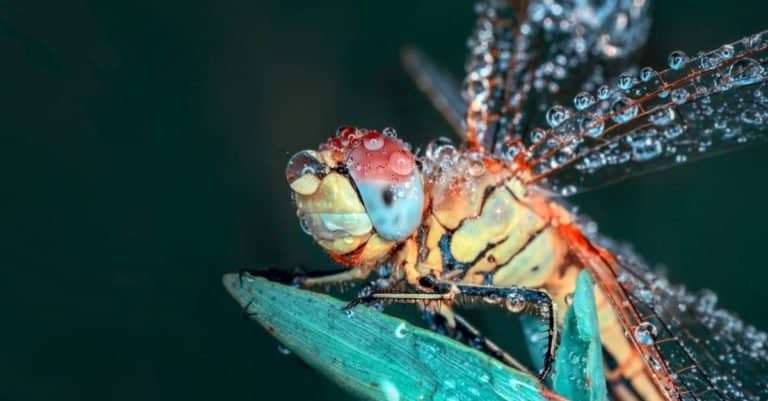
- These insects have 5 eyes, with each of their two compound eyes containing up to 30,000 individual facets.
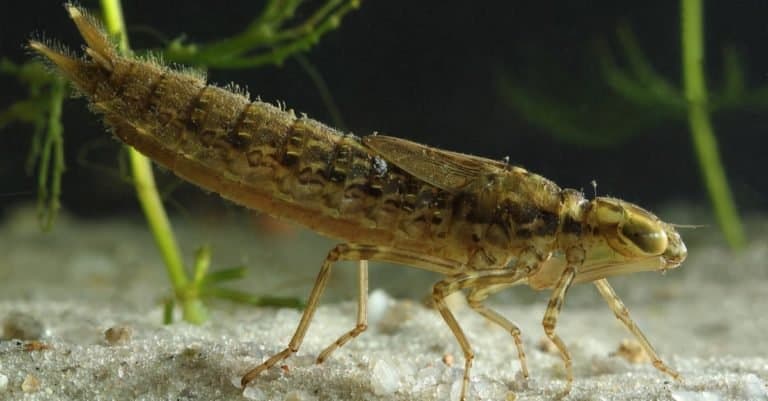
- In the life cycle of this insect, its larvae stay in the water for up to 5 years.
- These insects can see 360 degrees around them.
Evolution and Origins
Dragonflies are an ancient group of insects that have existed for over 300 million years. They belong to the order Odonata, which also includes damselflies. The earliest dragonfly-like insects were much larger than the dragonflies we see today, with some species having wingspans of up to around two and a half feet.
Dragonflies have undergone little evolutionary change over the past 300 million years, as they had already evolved to be perfectly adapted to their environment. Their long, slender bodies, large wings, and powerful flight muscles have allowed them to thrive in a variety of habitats, from freshwater streams to open skies.
The evolutionary success of dragonflies can be attributed to their adaptability and versatility. They feed on a variety of prey, including mosquitoes, flies, and other insects, and their larvae can live in various aquatic habitats, from still ponds to fast-flowing streams. This has allowed dragonflies to spread to almost every corner of the world and occupy a wide variety of ecological niches.
The fossil record of dragonflies provides important insights into the evolution of insects and the ancient Earth. It shows that dragonflies have been able to survive and thrive in a changing world and that they have been an important part of the food chain for millions of years.
Dragonflies are a fascinating and ancient group of insects that have adapted and evolved over millions of years to become the highly successful creatures we see today. They continue to play a crucial role in many ecosystems, serving as both predators and prey, and providing valuable insights into the evolution of life on Earth.
Species, Types, and Scientific Names
While Anisoptera is its suborder, the dragonfly belongs to the order Odonata. The word Odonata comes from the Greek for ‘toothed one.’ This refers to the jaws of this insect.
There are around 7,000 species of true dragonflies. These insects are closely related to the damselfly, though damselflies have the suborder classification of Zygoptera.
These insects live everywhere on the globe except for Antarctica. They live in warm climates and near bodies of water, including lakes, ponds, marshes, and streams. Adults are easily recognizable by their narrow, needle-like bodies and two pairs of slender, colorful wings.
There are 14 types, including:
- Petaluridae
- Aeshnidae
- Gomphidae
- Austropetaliidae
- Cordulegastridae
- Neopetalia Punctata
- Chlorogomphidae
- Corduliidae
- Libellulidae
- Macromiidae
- Synthemistidae
- Darners
- Saddlebag
- Gliders
Appearance
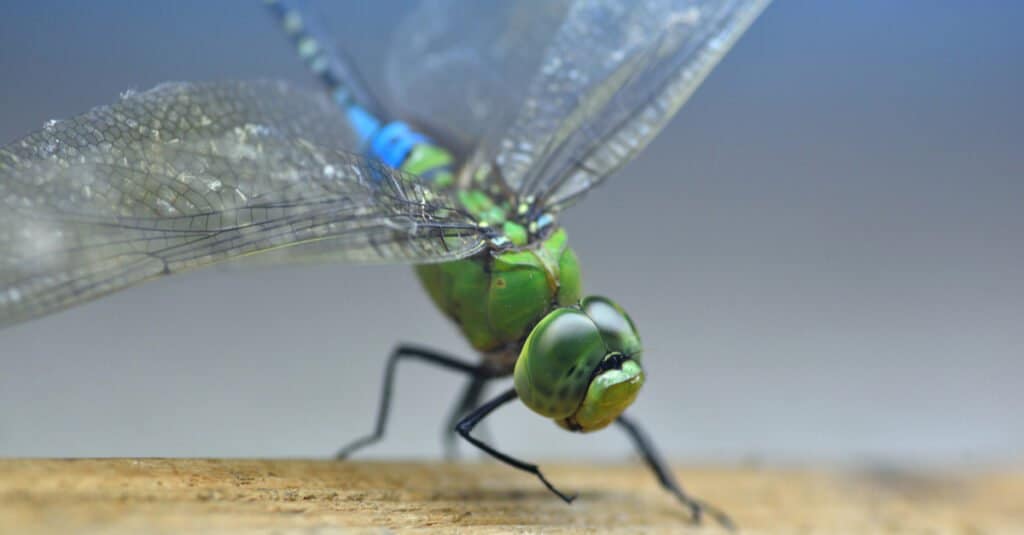
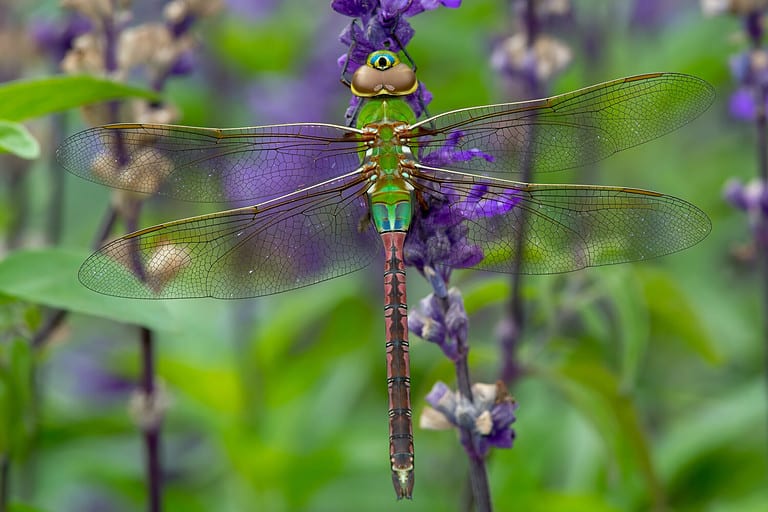
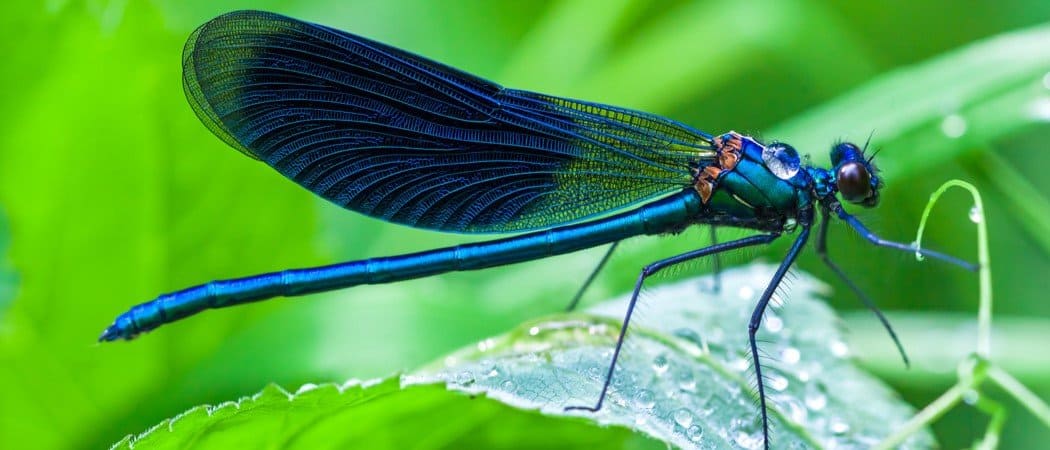
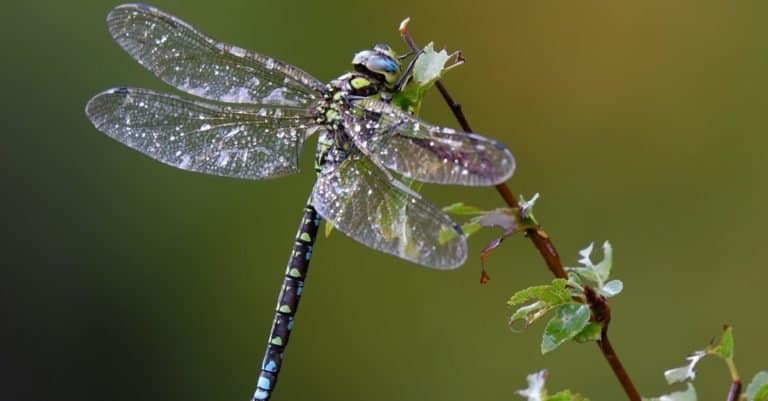
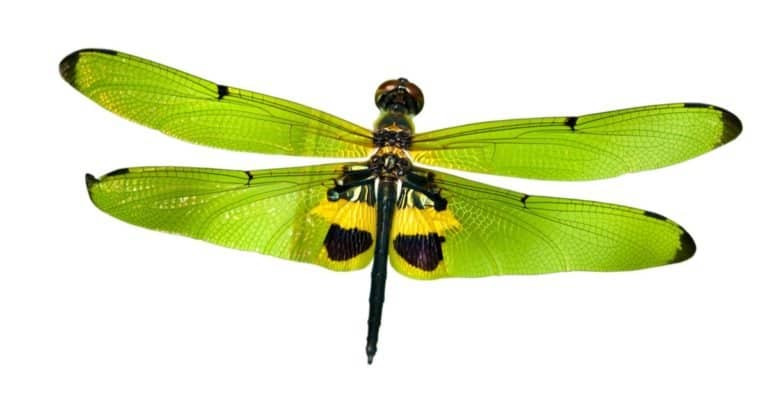
An adult measures from 1 to 5 inches long and weighs less than 1 ounce. They have 6 legs and 2 pairs of wings.
©Photoongraphy/Shutterstock.com
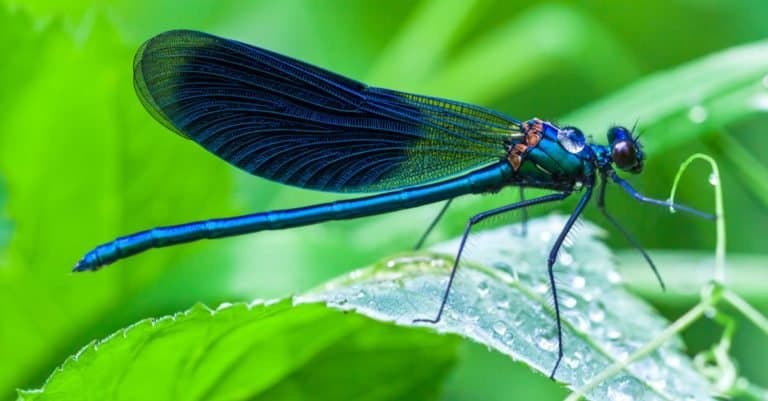
An adult measures from 1 to 5 inches long and weighs less than 1 ounce. They have 6 legs and 2 pairs of wings. The wingspan of the insect can measure up to 6 inches. This insect’s color depends on what type it is. They can be brown, blue, yellow, green, or red. Their wings have an iridescent or metallic appearance.
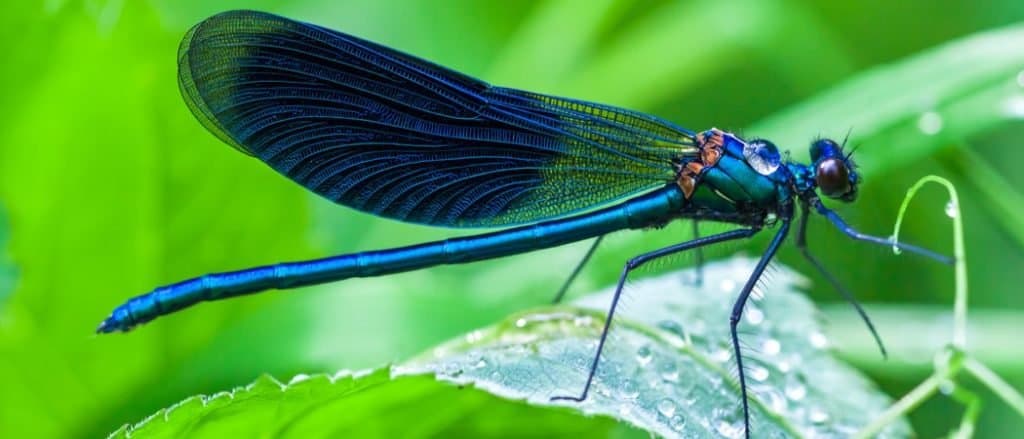
The damselfly is the closest relative of the dragonfly. They are similar in appearance, with two pairs of wings and brightly colored bodies. However, a notable difference is that a dragonfly rests with its wings spread out, while a damselfly rests with its wings pulled together.
Among the largest types of dragonfly are species such as the giant petaltail (Petalura ingentissima) and Tetracanthagyna plagiata, which holds the record for the largest wingspan of any living dragonfly at around 6.4 inches (163 mm).
These insects have a few adaptations they use to protect themselves from predators. For one, they can fly up to 35 mph. Also, they can change directions mid-air, allowing them to escape some predators. Their eyes provide them with a 360-degree view of their environment. Thus, they are likely to spot a predator with enough warning to escape.
These insects are solitary, but when they do form groups, they are called a flight or a cluster. Males can be aggressive when defending their territory from other males.
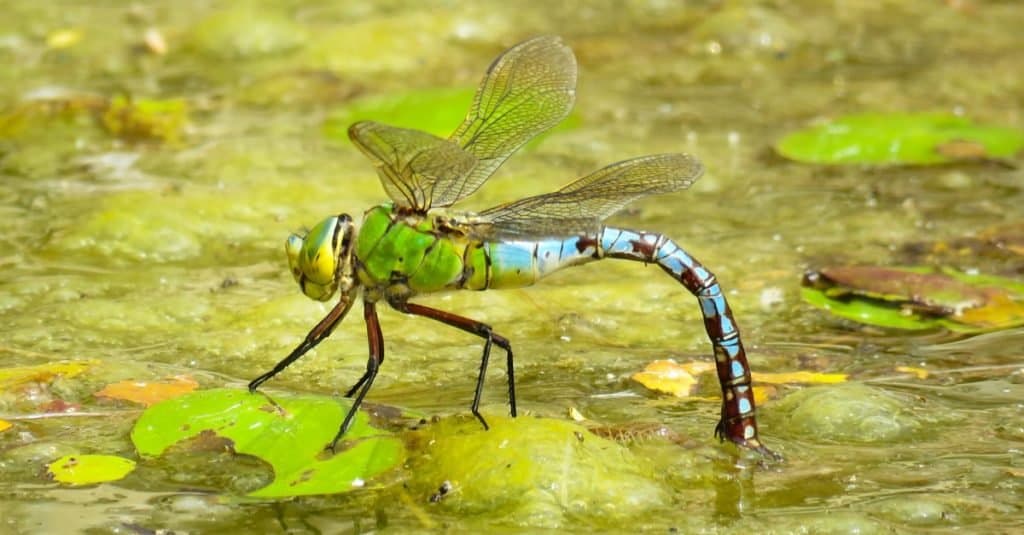
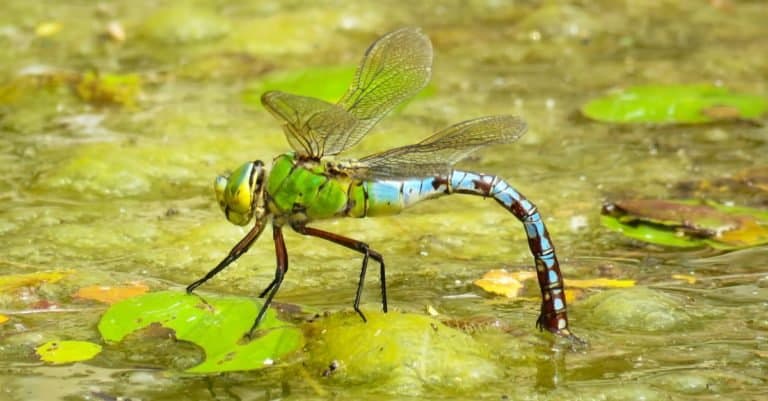
Emperor Dragonfly on a pond, UK.
©Helen Cradduck/Shutterstock.com
Habitat
These insects are found throughout the world except for Antarctica. Though they don’t live in people’s homes, some do live near people. These insects make their home around bodies of water, including ponds, streams, lakes, and rivers. If a homeowner has a pond on their property, there are likely to be dragonflies nearby. Similarly, families living near a large creek or river may see dragonflies in the area.
Diet
These insects have a carnivorous diet. Specifically, they eat insects, which has earned them the classification of insectivore.
What eats dragonflies?
Frogs, fish, birds, and large spiders are all predators of adult dragonflies. A dragonfly baby, also called a larva or nymph, is vulnerable to the same predators.
What do dragonflies eat?
These insects eat mosquitoes, gnats, and cicadas. An adult eats from 30 to over 100 mosquitoes each day. Some types of dragonflies hunt at night while others look for food during the day.
Dragonfly Pictures
View all of our Dragonfly pictures in the gallery.

yanikap/Shutterstock.com
How to say Dragonfly in ...
Sources
- San Diego Zoo / Accessed February 13, 2021
- Wikipedia / Accessed February 13, 2021